Dreamwolves Alaskan Malamutes and Siberian Huskies

Breed Health

Eye Disorders

Are Siberian Huskies & Alaskan Malamutes prone to eye problems?

Of the three major eye diseases the Siberian Husky and the Alaskan Malamute are prone hereditary cataracts are the most common, followed by corneal dystrophy, and progressive retinal atrophy. Within the last several years (since 1999 or so) the has been an increase in Siberian Huskies diagnosed with glaucoma, as well. All of these eye problems are most likely genetically caused. Careful screening of potential breeding pairs has helped reduce the incidence of these problem in the breed, and the current incidence of PRA is relatively low. Obviously, Siberian & malamute owners and breeders should regularly check and get clear eye tests prior to embarking on a breeding program.
IF A PUPPY’S PARENTS ARE CLEARED OF EYE

DISORDERS DOES THAT GUARANTEE THAT THE DOG WILL NOT DEVELOP EYE DISORDERS?
No. The screening process for eye disorders can only determine “phenotype” (genetic expression) but cannot determine “genotype” (actual genetic make-up). Because disorders like RD and gPRA are results of recessive genes, it is possible that a dog may carry the recessive gene without expressing it. In such a case, the recessive gene for the disorder is present but “masked” by the dominant gene for normal eye structure and function.

Such a dog would be called “a carrier” of the disorder. To be affected by the disorder, the dog must receive a recessive gene from both parents. For these reasons, eye disorders attributed to recessive genes are often difficult to completely eradicate from the gene pool because “a carrier” may be bred many times before it is realized that the dog does indeed carry the disorder as shown by afflicted offspring.
In order for the disorder to affect offspring, the mate must also be a carrier. Over the years, a carrier will produce many more carriers. The more carriers in the gene pool, the greater the risk of producing offspring which will be afflicted by the disorder. In a litter born of screened parents, there is a 0-50% risk (0-5 out of 10 puppies) of the litter being carriers of a recessive disorder such as RD; there is a 0-25% risk (0-2 out of 10 puppies) of the litter will actually develop an eye disorder such as RD. For these reasons it is recommended that dogs suspected of being carriers through expression of the disorder in offspring no longer be allowed to breed.

Dominant genes are more easily eradicated from the gene pool because individuals carrying the gene will always express it. However, one complication lies in the fact that some dominant disorders are not observed until later in life, and an individual may be bred prior to discovery of the disorder.

Once a hereditary eye disorder has been diagnosed, eliminating the affected individual from the breeding program and alerting owners of offspring to the potential risk may help in preventing future generations of developing hereditary eye disorders.
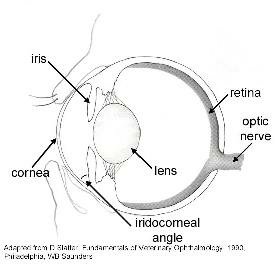
 

Glaucoma causes the animal significant pain and vision loss usually before it is detected by the owner. This disease is still being investigated by the Siberian Husky Club of America to determine it’s significance in the breed. They have not yet (as of February 2006) recognized it as a hereditary disease in the Siberian husky.

Glaucoma is a leading cause of blindness in dogs. It is the result of increased fluid pressure within the eye (elevated intraocular pressure or IOP). If the pressure cannot be reduced, there will be permanent damage to the retina and optic nerve resulting in visual impairment. Complete blindness can occur within 24 hours if the IOP is extremely elevated or can occur slowly over weeks or months if the elevation is mild. Glaucoma is usually very painful.

Glaucoma may be primary (inherited) or secondary to a number of eye disorders including luxation of the lens, tumours of the eye, and uveitis
Primary/inherited glaucoma causes an elevation of pressure within the eye because of abnormal drainage of fluid through the iridocorneal angle. When the angle at which the iris and cornea join is wide, the glaucoma is classified as open angle. If the base of the iris is pushed forward, the glaucoma is described as narrow angle.

What is progressive retinal atrophy?
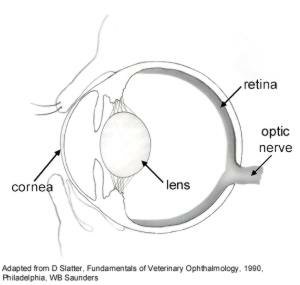

Progressive Retinal Atrophy (PRA) PRA is the most common disorder affecting the retina of the dog and is a result of the reduction of retinal blood vessels and atrophy of the receptor cells of the retina. There are two types of PRA: generalized-PRA and centralized-PRA. In generalized-PRA, there is overall retinal function loss. Both eyes are affected, though one may be at a more advanced stage than the other. The condition is progressive, as indicated, though the rate of progression varies from breed to breed and individual to individual; however, the end result in all cases is blindness. Dogs afflicted with g-PRA often can only recognize objects immediately in front of them as there is early loss of peripheral vision. Centralized-PRA also affects both eyes and is progressive, however, dogs may retain peripheral vision for several years, but there is an early loss of central vision.

The cells of the retina receive light stimuli from the external environment and transmit the information to the brain
Where it is interpreted to become vision. In progressive retinal atrophy(PRA), deterioration of the retinal cells causes blindness.
The retina lines the back of the eye.

The inner layer is the neural retina (called simply the retina) which has 9 layers, the outermost of which consists of the photoreceptor cells – the rods and cones. The outer layer of the retina is the retinal pigmented epithelium (RPE). In dogs the retina is not mature until 6 or 7 weeks of age.
The term progressive retinal atrophy covers several types of inherited degeneration (deterioration) of the retina. Sub-classifications of PRA are based on the age at which dogs show signs of the disease and the type of retinal cell which is affected.
Generalized PRA:These diseases affect primarily the photoreceptor cells. Both eyes are similarly affected and dogs eventually become totally blind.

Age of onset: g-PRA: 2-3 years; c-PRA: 4-10 years Symptoms: g-PRA: night blindness, “tunnel vision”. c-PRA: gradually failing vision, tendency
To collide with stationary objects in dog’s path, poor distance vision, slow pupillary reflexes, dilation of pupils even under daylight conditions.
Treatment: Currently there is no successful treatment for slowing down or reversing the degeneration processes associated with either form of PRA. Treatment with vitamin A has been reported to improve vision in dogs in early stages

What are cataracts?
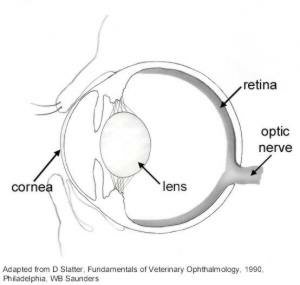
A cataract is any opacity or loss of transparency of the lens of the eye. The opacity may be confined to a small area of the lens or capsule, or it may affect the whole structure. A complete cataract affecting both eyes will result in blindness, whereas small non-progressive cataracts will not interfere with vision. Primary cataracts occur in some breeds; in other breeds the cataract may develop secondarily to another inherited disorder such as progressive retinal atrophy.

Most cataracts are inherited. Non-hereditary cataracts also occur, as a result of other diseases, trauma, toxicity, or metabolic disturbances
How are cataracts inherited? The genetics have not yet been defined for most affected breeds. In others, the mode of inheritance is autosomal recessive or with incomplete dominance.

What are juvenile cataracts? According to CERF, the incidence of juvenile cataracts in the breed checked by ACVO veterinarians is around 15-18%. The actual incidence is probably higher as many long-time breeders discover the anomaly in young dogs early and never certify them. With a typical juvenile cataract, the dog’s vision is not usually substantially affected, and they lead a full, happy, albeit it neutered, life. However, a more aggressive cataract also exists, which progresses quickly and may cause blindness by 2 to 3 years of age.
What is corneal dystrophy? Corneal dystrophy affects the cornea or the outer transparent portion of the eyeball. In most cases, Siberian Huskies with this disorder have an abnormal collection of lipids in the clear cornea of the eye which results in a hazy or crystalline opacity. Ophthalmologists describe the location of the opacity as anterior, mid, or deep stromal. The Siberian Husky is prone to deep stromal dystrophy which involves triglyceride deposits. Annular dystrophy also occurs and appears as a doughnut shaped opacity in the peripheral cornea. Corneal dystrophy is usually seen in young adult dogs and may affect females more than males. Vision is seldom affected and no effective therapy for the condition exists at this time. Recent genetic tests are suggesting that a recessive gene with variant expression transmits this disorder. Some corneal dystrophy is often not present or detectable until age 4 to 6 years, at which time the dog could easily have produced a few litters and perpetuated the problem. This will prove to be a difficult genetic disease to eliminate from the breed.

More on PRA/CPRA
Progressive retinal atrophy (PRA) and central progressive retinal atrophy (CPRA) affects the retina, the light-sensitive inner lining of the posterior part of the eyeball. The retina contains two types of specialized cells called rods and cones. The rods are necessary for sight in dim light or night light, and the cones are utilized in in bright light vision. The Siberian Husky has a unique type of PRA that is only found in Siberians and man. This type of PRA is called XLPRA (X Linked PRA) since it is transmitted through the “XX” chromosome of the female. It will cause a loss of night vision followed by a loss of day vision, eventually blindness. The recessive gene for XLPRA is situated on the “X” chromosome of the female. Females, who inherit a defective gene on the “X” chromosome from one parent and a normal gene on the other “X” chromosome from the other parent, will not be seriously affected. They will be carriers with very subtle retinal defects and no loss of vision. The male puppy from a carrier dam will receive either a defective gene or a normal gene, depending on what chromosome was copied in the DNA replication. If he has the defective gene, the dog will be affected with PRA since males carry an “XY” chromosome. The disease in males can be devastating with loss of vision as early as 5 months of age.

Hip Dysplasia

What’s the cause of hip dysplasia?
Canine hip dysplasia is an inheritable disease. Its mode of inheritance is termed “polygenic,” meaning that it is due to a combination of multiple genes. Because of the polygenic nature of this disorder, some normal dogs.

(Those that hip tested clear ) produce a percentage of dysplastic offspring. The breeding pair, although physically normal, may each transmit some of the dysplastic genes to their offspring, thus the offspring may receive a combination of complementary and uncomplimentary genes from both parents ( it’s those little hidden recessive genes) which may cause hip dysplasia in a pup bought from hip tested clear parents.

The division of defective genes is very uneven, with one parent contributing more defective genes than the other. Environmental factors such as a high caloric diet during the rapid growth phase of a puppy can exacerbate the changes in dysplastic hips, but cannot create a dysplastic. dog Hip dysplasia occurs when it’s not fit properly into the pelvic socket. This condition, while not present at birth, develops. Hip dysplasia is an abnormality of the hip joint in which the head of the femur goes during the first two years of the dog’s life.

It is often progressive, causing inflammation, pain, and arthritis in one or both hips. Symptoms may range from mild to severe and can be aggravated by strenuous exercise. Though they are at risk for hip dysplasia, the Siberian Husky ranks relatively low when compared to other breeds out of the 136 breeds of dog tested for hip dysplasia. The husky ranks 134th, with only a 2% chance of having Hip dysplasia. Hip dysplasia is an abnormality of the hip joint, typically the ball and socket of the joint becomes deformed, meaning the ball joint does not sit and fit correctly into the socket properly , which in turn can lead to arthritic problems in later life, in extreme cases mobility can be effected from an early age.


KC/BVA Hip-Scoring Scheme

In recent years, there has been a trend towards X-Raying and scoring of breeding stock in order to ensure that only those animals with acceptable hips are used for breeding. The scoring scheme allows for each animal to be graded according to a set of pre-defined criteria. The scoring range is from 0-53 on each hip (0-106 in total) where 0 represents perfect hips and 106 represents the worst scenario. This average score is often lowered and will probably change even more as more dogs are scored. The current average for the breed is always given with the BVA sheet returned with the X-ray.

Interpretation of Hip-Scores however, it must be recognized that hip dysplasia is not a black and white issue. It is not a matter of whether a dog has or has not got the problem, but rather the extent to which it has the problem. Any mating which uses an animal below the breed average, has the potential to improve the overall state of the breed, with regard o hip dysplasia. Similarly, use of an animal with a score above the breed verage should not necessarily be condemned providing the immediately preceding enerations are of low-score and an effort has been made to use a low-scoring tud dog. It is not uncommon for parents with good hips to produce offspring ith poor hips as there may be ancestors in the pedigree with poor hips and this can come to the fore in a subsequent generation.

Occasionally, puppies produced from several gnerations of low-scoring ancestors can still be affected. It is important note that veterinary research indicates that there is also an environmental Influence on the incidence of HD. Poor management of the growing dog will relevant it reaching its maximum potential in terms of hip status. Over-exercise, ver-feeding, excessive use of vitamins and supplements can all have an adverse effect on the development of bones and joints


+FACTORS AFFECTING HIP DYSPLASIA AND SCORING

M.B. Willis
Positioning: Tilting of the X-ray to the side or forwards towards the camera will adversely affect the score to some degree. There may even be uneven scoring in terms of right vs left side and extra 3 or 4 points depending on the degree of lift. The effect will be largely on the first three items. Tilting is unlikely to effect the last six items to any degree. For an in depth look at this topic please take a look at www.leerburg.com

Reader: Readers can differ slightly in interpretation. The BVA use two readers from a panel of 9 or 10 selecting fairly randomly. All panelists are Diplomats of Veterinary Radiology (DVR) and thus highly experienced. Nevertheless even they can differ slightly in their interpretation of plates. If a user feels that the score was wrong then appeals are dealt with by their chief scrutineer.

Anesthetic: Recent information suggests that anesthetics can give rise to greater joint laxity than will sedatives. Thus a dog that is anaesthetized MAY show a higher score for Norberg angle and Subluxation than the same dog would if merely sedated. Most schemes seek to anaesthetize dogs and thus all are being compared on valid terms. If however, a breeder is submitting animals that are sedated it could lead to slightly lower scores and thus apparently better results than rivals who are using anesthetics. This must be borne in mind when considering score data.

Sex: In man, female children are at greater risk of HD than males. In the dog it looks as though a similar status exists. In most breeds with enough data females score some 3-4 points higher than do males. This has nor been observed in OFA data but is seen in British, Australian, and Scandinavian data for the majority of breeds.

Age: In OFA data a large age effect is claimed. With scoring the effect appears to be much less. For every month of life after 12 months hip score increased by from 0.07 to 0.17 points. This is quite small and suggests minimal age effect in score data. However, good hips will show almost no change while poor hips may show a larger effect. Breeders are urged to score as soon after 12 months but larger breeds might be better at 18 months.

Breed: Breed effects are known, with some breeds at high risk others low. The belief is that this was associated with growth rate or 60 day-weight is now less tenable. Although larger-sized breeds generally tend to be more prone to HD than smaller sized ones this is not inevitable.

Exercise: This is unclear but excessive exercise in early puppy hood seems unwise. If one had bred for bad hips then a failure to exercise will not necessarily prevent HD occurring. In dysplastic dogs exercise is necessary to maintain muscularity which will be lost if the dog is not exercised. Such dysplastic dogs need exercise little and often, preferably lead work on hard surfaces.

Synovial fluid: This is a lubricant in joints. Excess synovial fluid is implicated in HD particularly through hyaluronic acid, a component part of the fluid, where a reduced concentration is associated with greater HD.

Hormones: Hormones are thought to influence HD but evidence is unclear. However it is known that SOME bitches will show greater joint laxity during oestrus and thus score higher. It is recommended that for this reason bitches NOT be X-rayed for the scheme during oestrus

Vitamin C: There is no evidence that Vitamin C is implicated in HD. Indeed use of large amounts of vitamin C to combat HD is contra-indicated and not recommended. Breeders are therefore urged not to use Vitamin C in a belief that HD will be avoided. It will not be!

Unilateral Hip Dysplasia: In all breeds some 80% or more of dogs differ by four points or less between hips and thus HD largely a bilateral state. However, some dogs score unevenly. At times this is a positional feature but in some it is not.

Dogs can score unevenly because of trauma (injury) or due to transitional segments on the spine but a proportion of dogs are uneven and will breed this feature on

Breeding: Breeders should select as good a hip as they can in both males and females, bearing in mind breed average. The lower the hip score the better the broad terms but they should look at the where points are scored and try not to use animals scoring over 3 in any one place and certainly not mate animals where both score high in the same features.

The individuals own score must suffice initially but a good hipped dog from a good pedigree (parents / grandparents) is a “better bet” than one with a less good pedigree. Dogs with good litter mates are also potentially safer than dogs with poor litter mates and to this end the scoring of litter mates, whether show dogs or pets, is desirable as an aid to breeding. However, once progeny data are available on sufficient progeny this is more useful than the data on the animal or its pedigree/litter mates etc.

Epilepsy

What is epilepsy?
Epilepsy is a condition that leads to dogs having repeated fits or seizures due to abnormal activity in the brain. Most seizures happen when dogs are relaxed and resting quietly, often in the evening or at night.

Symptoms Symptoms include fits or seizures. Once seizures start, dogs lose consciousness and don’t respond to owners. Facial twitching and running or stretching movements with their legs are also common symptoms and sometimes they cry out. Seizures typically last between 1 and 3 minutes. Once a fit is over affected dogs may behave oddly and may appear dazed and confused, sometimes for several hours. More rarely fits will continue over a longer period. This can be an emergency as the brain may become starved of oxygen. In such a case, urgent veterinary advice should be sought.


What causes epilepsy?

Epilepsy is caused by abnormal activity in the brain. Some breeds of dog are more susceptible and the condition may be inherited in breeding lines. It may also result in minor brain damage caused by head injury or from oxygen starvation (for example at birth). Other types of seizures may be caused by underlying medical disorders, so your vet will usually need to investigate further.

Treatment a number of medications are available to control regular or persistent epileptic seizures. If you think your dog has developed fits or seizures, contact your vet who will be able to advise appropriately.

Hot Spot

What is a “hot spot”?
A hot spot is a localized area of skin inflammation and infection. The infection can be superficial or deep. Other common names for this condition include: moist dermatitis, and acute moist dermatitis.

What is the medical name for this condition?
Also known as “pyotraumatic dermatitis”, these common skin lesions are usually caused (and made worse) by biting, licking, or scratching. Broken down, “pyo-” refers to “pus”, “-traumatic” refers to self-inflicted trauma of biting, licking, scratching, and so on, and “dermatitis” means inflammation of the skin.

What are the signs of a hot spot?
Redness, oozing, pain, and itchiness are hallmark signs. Hair loss is commonly present. Sometimes hair can mat over the lesion, obscuring the size and degree of the problem. These lesions can appear suddenly, and grow rapidly (hours).

It is common for an owner to notice a small area of inflamed skin in the morning (perhaps an inch or couple centimeters in diameter) and come home from work to be met with a large area the size of the palm of a hand. The dog is usually highly agitated, and will not leave the area alone. Some dogs will even growl or snap if the area is touched.

What causes a hot spot?
There is usually an inciting factor to initiate the extreme licking and scratching behaviour. Look for fleas, mites, or other external parasites, an insect sting or bite, allergies (food, inhalant, contact), or injury (skin wound, scrape, etc.). Some animals have been known to “start” a hot spot out of boredom or stress-related psychological problems.

What can I do to treat a hot spot?
The first thing to do is speak with your veterinarian. Due to the rapidity of spread and possibility of deeper skin infection, it is wise to start treatment with your vet. Also, these hot spots can be very painful to the animal — caution is advised,

Shave the area, the first treatment for hot spots is to dry them out and get air to the area. Hair loss is a feature of hot spots, but hair can also mat over the inflamed area, covering up a potentially much more severe and larger problem.

Cleanse the area with cool water and hibby scrub { obtained from vets }

Cool compress the area 2-4 times a day with a cool wet washcloth.

Medications Depending on the severity and size of the hot spot, your veterinarian may prescribe oral antibiotics, topical drying sprays or medications, and maybe a short course of steroids

Prevention of licking, biting, scratching -i.e. Elizabethan collar

Additional home remedies that can be used until you can see your vet: tea bag compresses (black or green tea) to help dry the area out. Tea can be used as a wash or as a compress.

Hydrocortisone creams some people advocate using a thin film of an over-the-counter hydrocortisone cream. I would recommend talking to your vet first — I myself find sudacream a godsend on Hotspots

Flea and Tick

Most dogs suffer from flea infestation at some point in their lives and while there may be no symptoms at all, the most common symptom to look out for is scratching or chewing most commonly at the tail-base and lower back. Close inspection may reveal either small black insects or more likely the small, black flea faeces, which are passed through the insect after sucking blood from dogs. Flea faeces can be identified by brushing your pet’s coat with a fine-toothed comb and placing the debris you collects on a piece of white paper. Flea faeces will dissolve in water to produce brown/red swirls on the paper.


The adult fleas you may see on your pet are only the tip of the iceberg – 95% of the problem exists as eggs, larvae and pupae in the home. Also if your dog lives with a cat it’s a good idea to treat it at the same time! Your vet, country store, pet shop or pharmacist will be able to advise you on an effective approach to flea control and treatment which should involve treating both your pet and your home for fleas.

Worming

Worming Puppies
Now everyone knows pups need worming but when and how often and what with is a different kettle of fish.
Every puppy is born with a natural amount of worms this is what gives them the appetite to feed and to thrive, but it is not natural or healthy for a puppy to become riddled and have a bloated tummy because of a worms.

Your puppy should be wormed at regular intervals starting at 2wks old then again at 5wks and 7wks and before they start to go at 9wks then again at 12wks old puppy should then be wormed at monthly intervals till 6mths old, and then at least every 3 months for life.


Worming a Bitch before and after whelp
Now worming puppy is all well and good but what about mom , mom and dad should be wormed before the mating takes place , mom should be wormed six weeks into pregnancy as the raise in hormones can produced worms , the mom should be wormed when the pups are born and everytime the puppies are wormed WHY well mom cleans up after her pups so if you are worming your pups and mom is consuming their waste then common sense tells you that mom is ingesting puppies expelled worms and eggs hence re infecting herself.
What should you worm with we recommend Panacure liquid wormer for young pups up to 4wks (can be a bit messy but at least you know whose had what how much)

From 6wks you can give individual worm tabs in treats (bits of cheese spread we find this is best for adhering the tablet and making it near on impossible to eat the treat and spit out the tablet.

Drontal and milbemax are good worm tablets , all worming products should be bought from your vets , worming tablets and powders bought In pet shops is not legally strong enough to kill the worm eggs so the worming problem is never really resolved you just expel the adult worms.
Any puppy that is spewing worms Orally has a severe bloated belly is crying a lot or is expelling worms with blood or muscus should be taken to the vets immediately, as a serious infection of worms can be deadly in any dog yet alone a puppy.

Anyone who worms the parents and the puppies correctly should raise a wonderfully healthy litter with little chance of adult worms even getting a chance to develop in your pups or the mom.

Dont be afraid to ask your breeder when pups and parents were last wormed and what with, serious worm infestations can be costly at the vets and at worst can kill your puppy.