General Dog Care
Your duty to care
Owning and caring for a dog is great fun and immensely rewarding. But it is also a big responsibility and a longterm commitment, in terms of care and finances. If you own or are responsible for a dog, even on a temporary basis, you are required by law to care for him/her properly.
Vaccination is the only proven method of protecting dogs against a range of potentially life-threatening diseases including distemper, hepatitis, parvovirus and leptospirosis. Some additional vaccines may be recommended for dogs at risk of other specific infections. Your vet will be able to advise you on vaccination and will also carry out a health check to ensure he is in tip top condition.
Dogs’ nutritional requirements change according to their lifestage, with puppies, adults and senior dogs all having different nutritional requirements. Home-prepared diets are complex and need to be balanced correctly. Feeding a commercial ‘complete’ diet provides all the nutrients in the correct amounts and proportions. So-called ‘lifestage’ diets are available which cater for the specific needs of puppies, adult and older dogs.
It’s advisable to regularly examine your dog’s mouth for signs of oral disease which include bad breath, reddened, bleeding or swollen gums and build up of tartar. It’s worth checking your dog’s teeth from puppyhood so that he gets used to you examining them. Home dental care kits are available from vets, country stores and pet shops to help keep your dog’s teeth free from plaque. Many dogs enjoy chewing and the use of safe chews are also useful to help reduce the build-up of tartar.
Neutering is carried out for a variety of reasons including health-related issues, reproduction control and “heat”, behavioural / psychological reasons such as territory marking and dominance and aggression problems. It involves removing the ovaries and womb from females (spaying) and the testicles from males (castration). Both are surgical procedures carried out under general anaesthetic. Non-surgical alternatives for temporary or long-term postponement of heat (reproductive seasons) in bitches are also available. For further information, please contact your vet.
Microchipping is a permanent and inexpensive way of identifying dogs. A microchip about the size of a grain of rice is inserted under a dog’s skin around his neck. Each chip has its own unique number held on a central database. If your dog gets lost, it can then be scanned to find your details. Engraving ‘I am microchipped’ on your dog’s tag will highlight the fact he can be identified.
It can be very upsetting both emotionally and financially when pets fall ill, but pet insurance can soften the blow. Pet insurers offer policies against most eventualities and some even insure against accidental damage.
Daily exercise is essential to keep dogs healthy and mentally and physically stimulated – the level of exercise will depend on their breed, age and health. Exercise not only improves your dog’s wellbeing, but also helps build muscle tone and prevent depression, obesity, joint problems, heart conditions and behavioural issues. Your vet will be able to advise you on how long you should walk your dog for each day.
House Training
In our experience there is no difference between bitches and dogs when it comes to house training neither is cleaner or cleverer than the other
There are several ways in which you can toilet train your puppy but the old adage of rubbing their noses in it is not one of them.
NEVER EVER rub your puppies or dogs nose in its urine or feces.
One of the golden rules is to remember that harsh punishment does very little to hasten the training process, and usually only serves to make the pup fearful & scared of you thus this may only serve to cause him to have even more accidents and he may even become anxious and secretive .
Pups will often want to go to the toilet straight after a meal and upon waking, so take advantage of these times. Take your pup out first thing in the morning, last thing at night, and right after meals, naps and exercise , between these times , stay alert for signs that puppy is looking for a place to relieve itself , look for whining acting restless sniffing the ground and circling . Remember a young pup can’t hold their bladder for more than a couple of hours.
The average trips a puppy of 8wks to 16wks old needs to toilet a day is on average 8 to 12 , from 16wks to 6mths an average 0f 6 to 8 times a day from 6 to 12mths around four times a day ,and as an adult 2 maybe 3 times a day.
Take the pup to the area of the garden you wish them to perform, I usually take a cuppa and wait it out, every time puppy performs praise him saying something like you good girl or you clever boy in a happy excited kind of voice , give puppy a fuss and a treat , mally babies are eager to please and it won’t be long before they realize what you want them to do
Your puppy should be at least 90 % paper trained so it may be best to but some paper down by the back door , it is also a good idea to keep puppy contained to one room ( usually the kitchen ) till he learns to control his bladder a little better .
If an accident should occur, make as little fuss as possible, clean up accidents with a good odor remover so no lingering smells attract puppy back to the same spot.
House training doesn’t have to be a drama. Pups naturally like to have clean sleepi
ng quarters( so never put newspaper into their crate ) and most dogs are easily toilet trained, however, do not expect miracles from your pup at first. Young pups simply do not have sufficient control of their bladder and bowel muscles, sometimes not until four or five months of age, so accidents can and will happen. You just need a little patience and lots of newspaper
Results won’t be instant but toilet training your puppy should begin an hour after you get puppy home
Some simple rules should apply that will assist with toilet training your puppy ,don’t expect to completely house train a puppy under 16wks of age as I have already said they don’t have complete control of their bladder and bowel movements yet , feed your dog a nutritious diet and always feed at consistent times and puppy will eliminate at consistent times with consistent motions , do not feed puppy treats and table scrapes during toilet training times and do not feed anything a few hours before bed , once puppies type of food has been chosen stick to it ,during the house breaking period you should offer your puppy a drink of water at specific times based on a schedule , let puppy drink as much as he wants but pick the bowl up after 10 mins ( limiting your dog’s water intake will only occur during the house training period ) when puppy gets a little older he should be allowed access to clean water at all times , but while house breaking leaving food and water down to be ate and drank at puppies convenience , will only serve to cause constant and un predictable elimination ( there is a very short period between eating and drinking and eliminating for a puppy )
Persons who are working should either pop home every couple of hours or engage the help of a family member neighbour or dog walker, as the more vigil and consistent you are with training the quicker puppy will be house broken , if puppy is not taught to be clean how on earth can he learn to be clean .
You should also Choose a specific command at toilet training times maybe something like “be clean” eventually your dog will learn to associate this word with the action, this may sound a little drastic but it can have its uses like when you stop for a break on along car journey if you intend to show your dog it may also prove useful.
And last and most importantly NEVER NEVER chastise your puppy for an accident you never actually caught him doing , and if you have been out at work or shopping , coming in and ranting and raving at puppy for something he did several hours earlier will only stem to make him fearful of you and he will not think you coming home anything to get excited about , instead you will have to just grin and bare it and clean it up with the minimum fuss and when you see those big warm brown eyes that happy tail and your baby plants a hundreds kisses on you , you will know it will all be worth it in the end.
Crate Training
Cages and crates for or against, definitely for … cages aren’t cruel … peoples use of cages are cruel, when used correctly cages provide a safe and secure and happy environment, a place that your dog can relax and let their guard down a bit .
Cages are a must for any responsible dog owner for the dog and the owner, when used for the purpose they were designed for ( and I don’t mean to contain as many dogs as possible, in as little as space as possible) and stacked in rows etc. like battery hens, and certainly not to be used to contain the dog for the most of its daily life. Also, crates don’t house train puppies, their owners do .
A dog should not be crated caged or staked out for long periods of time or as part of the dogs normal daily living routine , although all three forms of restriction have important uses and needs and should be taught to all dogs as to promote safety and sensible ownership for not only the owner but the dog also.
A crate when used correctly and introduced to the dog properly is a positive environment for the dog, a crate or cage should never be used as a punishment. The cage should be introduced as a place to sleep or if you have several dogs a place to have a treat, as to avoid potential food fights.
You may need to put your pup in his cage for a nap while you tidy up or go to the shops or simply take a bath, this is not cruel, but beating the dog is … when you get out of the bath and find your cute puppy has ate the sofa, pulled down the drapes whilst playing tug of war with them, shredded the wallpaper and de threaded the carpetetc.
Prevention is often better than the cure, as the dog gets used to his crate, he will welcome the break. My dogs take themselves to their cages when they want to chill or just be quiet, its like their bedroom, their bit of space, however I do find two or three of them sometimes all trying to cram in one cage, which is quite a sight.:)
Then you have travel a cage may be required on long distant journeys or for travel in general, it is much safer for both the dog and you, it may prevent an accident or protect you and your dog from further injury should you be involved in an accident , then there is the vets.
Should your dog take ill and be required to stay at the vets, where do you think they will house the dog? I’m sure I would be safe to assume all vets use cages and if your poor pet is not accustomed to cages he is not only going to be freaked out by being away from you and his home, he will think he is being punished by being locked in a cage and end up traumatized as well.
So I could go on and on about good uses and such but I’m sure you are getting the idea of the good purposes that crate and cage training holds for you and your dog and I hope if you were one of the ardent anti cage persons that I may have helped convert and convince a few of you of the benefits and goodness in them especially for the dog , but remember a cage is to be used occasionally and not as a means of permanent confinement, after all you wouldn’t cage or chain up your kids all day, everyday, SO DONT DO IT TO YOUR DOG ! ! ! !
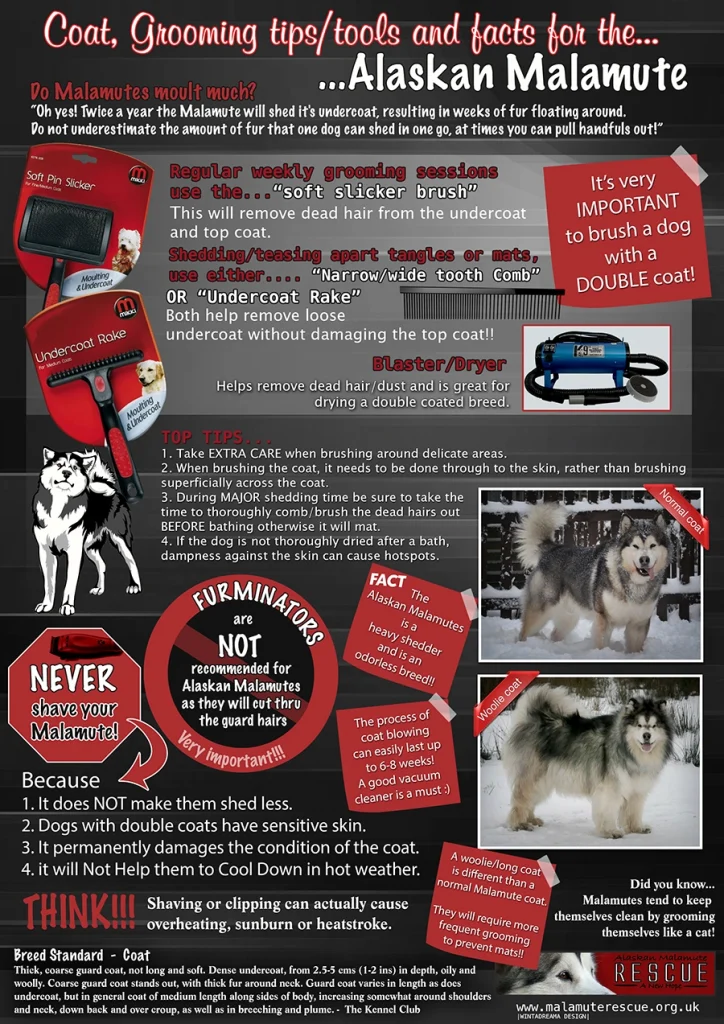
Grooming
AMCUK RESCUE Grooming poster